Selecting the optimal IVF equipment, including embryo culture incubator, is one of the most impactful decisions the clinics make when designing or upgrading their lab. With today’s rapid evolution in culture systems, IVF incubators and integrated workflow tools, the goal is no longer just maintaining stable conditions, but creating a consistently high-performance environment that reduces stress on embryos and increases implantation potential. Below, we break down the key categories of equipment and highlight what to consider when choosing solutions that best support a modern embryo culture and IVF workflow.
1. Culture Systems: Stability, Flexibility and Workflow Integration
A robust culture system should allow clinics to maintain uninterrupted environmental control from oocyte retrieval all the way through blastocyst development. Consistent temperature, pH and low-oxygen gas environment remain foundational, but leading labs prioritise now also modularity and reduced dish handling.
When evaluating culture systems, embryologists look for:
- Minimal lid-opening events
- Small independent chambers
- Options for both standard and time-lapse culture
- Compatibility with validated media systems and dish formats
Genea Biomedx’s GERI system, especially when used with GEMS culture medium suite, is a good example of a system built for workflow logic—optimised to reduce variability while keeping handling simple for embryologists.

2. Benchtop Incubators: Why Mini Chambers Are Becoming the Standard
Gone are the days when large box incubators dominated the IVF lab. Today, the preferred IVF incubator is typically a benchtop incubator with small-volume chambers with fast recovery and minimal cross-patient interference.
Key advantages of modern benchtop IVF incubators include:
- Faster temperature and gas recovery
- Reduced contamination risk
- Individualised environments for patients’ embryos
- Improved workflow efficiency
Whether clinics are choosing a compact benchtop system or a more advanced platform, the priority should always be maintaining stability during peak activity times—especially important for high-volume labs.
3. Multi-Room Incubators: Scaling Without Compromise
A multiroom incubator offers a compromise between large box incubators and small benchtop incubators: multiple isolated chambers in one instrument footprint. This design gives embryologists the flexibility to work on individual patients without disturbing others.
Clinics may consider a multi-room system if their lab:
- Handles a high patient volume
- Needs backup chambers for risk mitigation
- Prefers a standardised environment across multiple modules
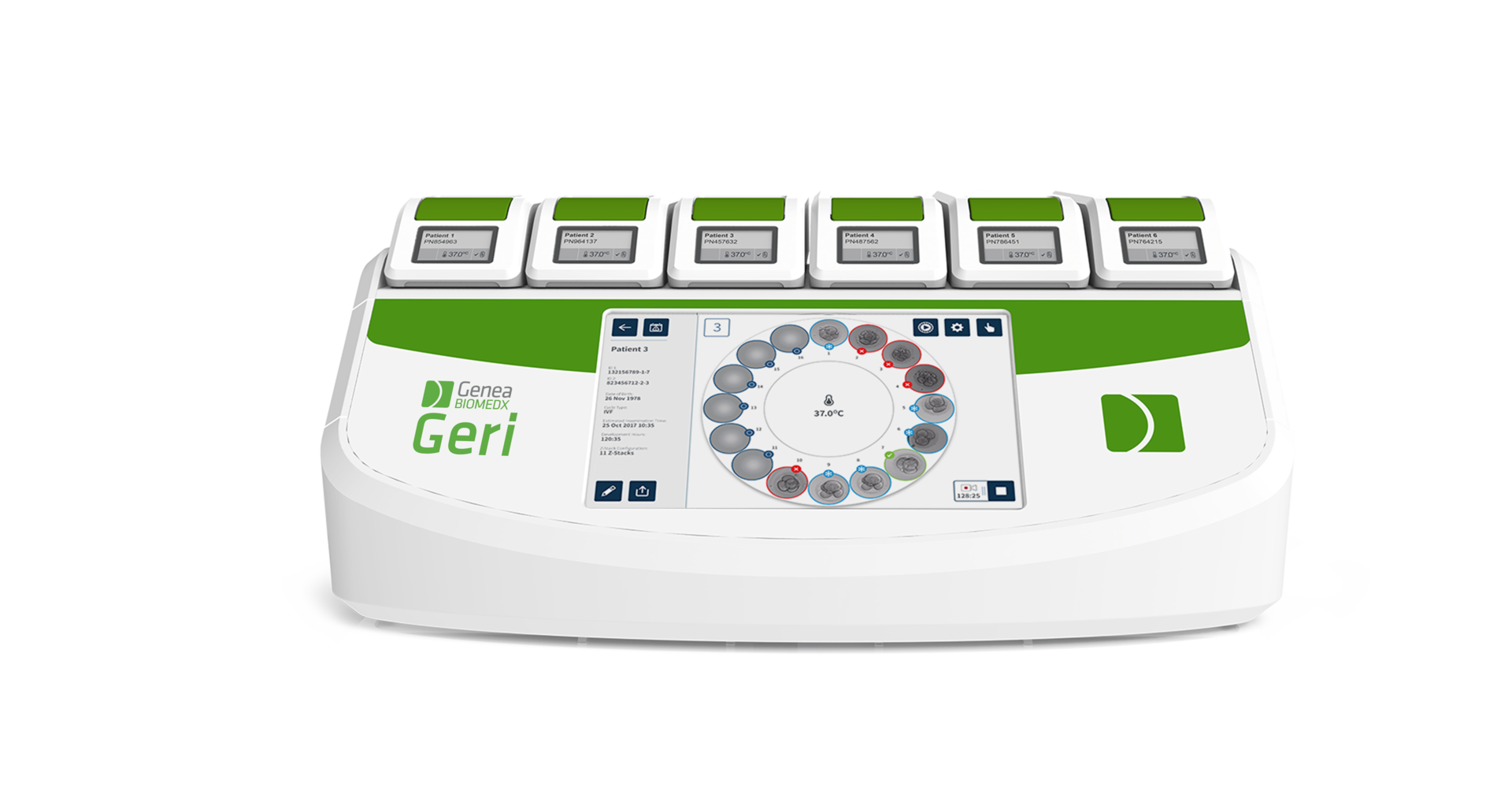
Systems like the Geri® incubator from Genea Biomedx exemplify this concept—each patient’s embryos have their own completely isolated chamber, reducing disturbance while supporting individualised culture.
4. Time-Lapse Incubators: Insight Without Interruption
Time-lapse incubators have reshaped modern embryology—not just by providing continuous imaging, but by eliminating the need to repeatedly remove embryos from culture for observation. When paired with built-in advanced embryo assessment options, including validated algorithms and AI solutions, time-lapse systems can support more objective embryo assessment and improved decision-making.
When evaluating a time-lapse platform, clinics should consider:
- Image quality and frame rate
- Image capture interval
- Number and adjustability of focal planes
- Chamber design—are each patient’s embryos isolated?
- Culture conditions – dry or humid or both
- Integrated morphokinetic and other annotation tools
- Data storage, export and reporting options
- AI-compatibility – whether bound to one system or offering flexibility to choose from the growing selection of options
- Ease of use during busy clinical cycles
The Geri® time-lapse incubator is a good example of a patient-centric device, combining uninterrupted culture with real-time imaging inside six fully independent micro-environments.
5. Matching Equipment to The Laboratory Goals
As embryologists assess their future equipment, they should take a step back and consider their lab’s objectives:
If they want to enhance embryo culture stability
→ Prioritise multi-chamber IVF incubators and low-disturbance culture systems.
If they are scaling up or standardising a larger clinic
→ A modular multiroom incubator allows predictable expansion with low operational variance.
If their goal is to improve selection accuracy and documentation
→ A time-lapse incubator will give deeper real-time insights without compromising culture conditions.
If they want streamlined, integrated workflows
→ Systems like Genea Biomedx’s Geri (for incubation) and GEMS (for media) can reduce variability and simplify day-to-day tasks.

Final Thoughts
- Choosing the right IVF equipment isn’t just about specs—it’s about aligning technology with the lab’s philosophy, workflow and patient load. Whether clinics are evaluating culture systems, upgrading IVF incubators or considering a shift to time-lapse technology, the best systems are those that support consistent, stable and patient-specific embryo care.