Table of Contents
- What Is Electronic Witnessing in IVF?
- Why IVF Sample Traceability Can’t Be Left to Chance
- Manual Witnessing vs Electronic Witnessing
- RFID vs QR Codes: Which IVF Witnessing Workflow Fits Your Lab?
- Guardian: Flexible Electronic Witnessing for IVF Labs
- Implementation Without Disruption
- Supporting Laboratory Efficiency Without Replacing Embryologists
- What’s Next for IVF Traceability and Connected Labs?
- Key Takeaways
- References
A single mislabelled sample in an IVF laboratory can mean the wrong embryo is transferred to the wrong patient. Although such events are uncommon, they have occurred and can have serious clinical, legal and emotional consequences. The UK fertility regulator publishes adverse-incident data and requires robust witnessing and traceability procedures for licensed clinics; these requirements are detailed, as outlined in the HFEA Code of Practice guidance Section 18: Witnessing and assuring patient and donor identification. [1]
In modern IVF laboratories precision extends far beyond embryo culture techniques. Every patient sample whether oocytes, sperm, embryos or cryopreserved specimens must be correctly identified at every stage of treatment. There is no margin for ambiguity.
As laboratories digitise their workflows, electronic witnessing in IVF has become essential for quality management. These systems help embryologists verify patient identity during critical procedures, strengthen the digital audit trail, support regulatory compliance and significantly reduce the risk of human error.
If you are establishing a new laboratory or modernising existing protocols, electronic witnessing is now a key technology for safeguarding patients while improving operational efficiency.
What Is Electronic Witnessing in IVF?
Electronic witnessing is a digital identification system that confirms patient samples are correctly matched throughout the IVF process.
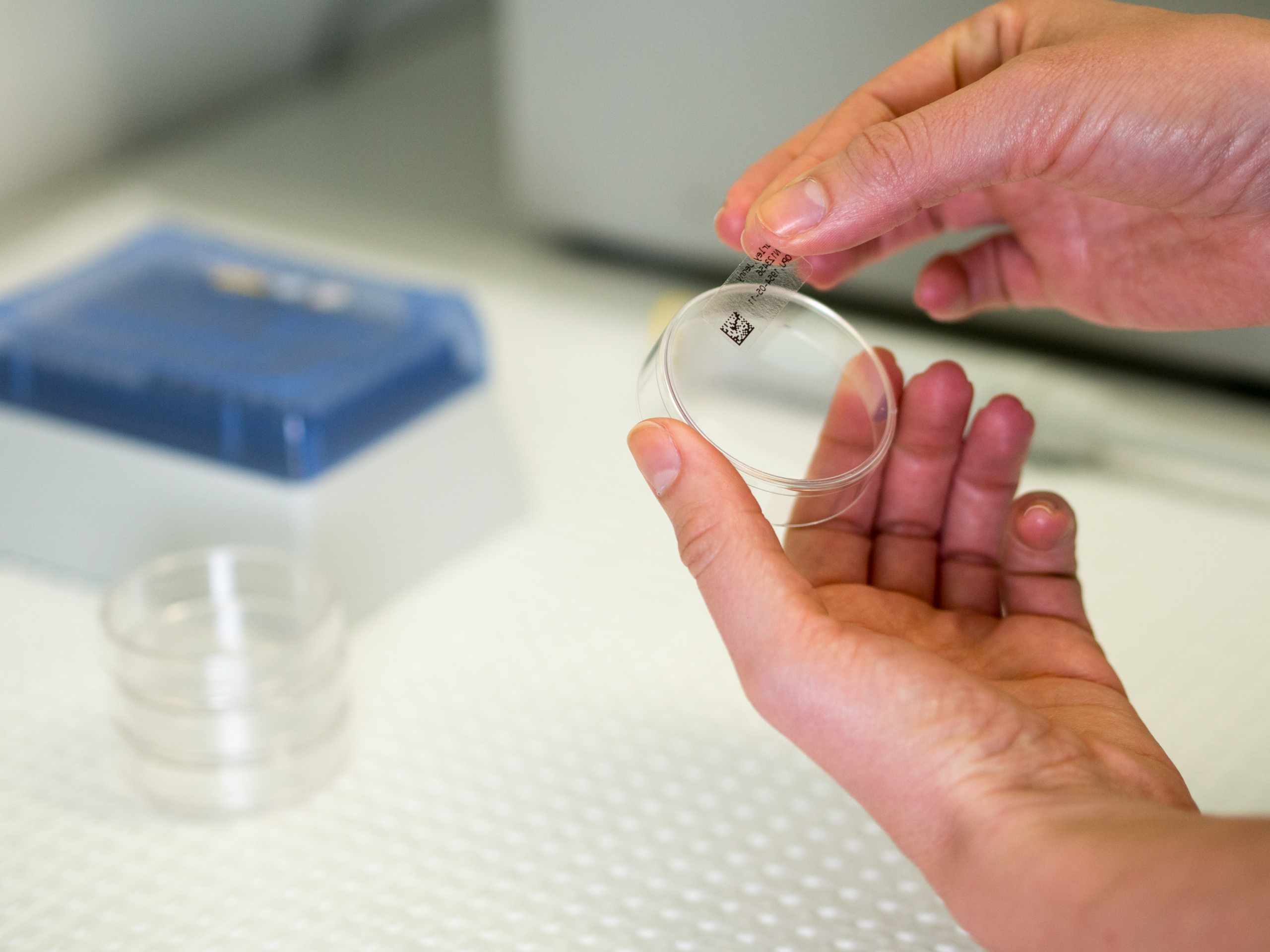
Instead of relying solely on manual double witnessing, electronic witnessing uses technologies such as RFID (Radio Frequency Identification) or QR codes to automatically verify that the correct gametes, embryos and patient materials are being handled during every critical laboratory procedure.
These identification checks occur during key stages across the full treatment cycle:
- Oocyte collection
- Sperm preparation
- Fertilisation (IVF or ICSI)
- Embryo culture
- Embryo transfer
- Cryopreservation
- Thawing procedures
Every verification is automatically recorded, creating a complete digital audit trail that supports laboratory documentation, accreditation reviews and quality assurance.
Why IVF Sample Traceability Can’t Be Left to Chance
Patient and sample identification is one of the most important responsibilities within any embryology laboratory.
Evidence from Sterckx et al. (2023) in a study published in Human Reproduction journal[2], which analysed 849,650 electronic witnessing points across 109,655 medically assisted reproduction cycles, found 144 critical mismatches, with sperm preparation and IVF/ICSI among the procedures most prone to mismatch. While the overall mismatch rate may appear low, each critical mismatch represents a potentially serious event that, if undetected, could have unacceptable consequences for patients and families. A separate analysis by Forbrig et al. (2025) in a study published in Reproductive BioMedicine Online[3], covering 73,719 electronic witnessing points across 11,210 ART cycles, also reported low overall mismatch rates while identifying workflow, time of day and staffing as key risk factors.
Unlike many other medical specialties, IVF laboratories routinely handle multiple patients’ biological samples simultaneously. Maintaining an unbroken chain of custody throughout treatment is fundamental to ensuring every embryo remains linked to the correct patient. The Human Fertilisation and Embryology Authority (HFEA) mandates strict traceability requirements for licensed clinics in the UK. Meanwhile, the American Society for Reproductive Medicine (ASRM) notes that a number of key misidentification risk points occur during an IVF cycle that require robust witnessing protocols, detailed in their 2026 publication[4]. European Society of Human Reproduction and Embryology (ESHRE) similarly emphasises sample identification as a cornerstone of laboratory quality management in its 2026 recommendations[5].
Electronic witnessing systems help laboratories in five core areas:
| Benefit | Description |
| Identity verification | Confirms patient identity before every critical procedure |
| Error reduction | Lowers the likelihood of identification mistakes through automated checks |
| Automatic recording | Logs every witness event without manual data entry |
| Audit readiness | Improves documentation for inspections and accreditation |
| Protocol compliance | Supports adherence to laboratory protocols and applicable country-specific regulatory and other requirements governing IVF treatments |
Electronic witnessing does not replace embryologists. It acts as an additional safeguard, ensuring established protocols are followed consistently, even during high-pressure periods or peak laboratory schedules
Manual Witnessing vs Electronic Witnessing
Traditional manual witnessing requires a second embryologist or trained staff member to verify patient identity before each critical procedure.
This remains an established practice, but it has limitations. Manual witnessing relies on staff availability, consistent documentation and direct human observation, which can be difficult to maintain during busy laboratory schedules or high-volume periods. Failure mode and effects analysis of witnessing protocols has shown that manual systems are particularly vulnerable to workflow complexity and time pressure.
Electronic witnessing introduces an additional layer of protection by automatically checking patient identifiers before procedures can continue and removing the dependency on a second person being physically present.
| Feature | Manual Witnessing | Electronic Witnessing |
| Staff requirement | Two members of staff required | One staff member only required for witnessing |
| Documentation | Paper or manual records | Digital records for every ID check |
| Error risk | Subject to human errors and undetected errors | Immediate real-time alerts when mismatches occur |
| Workflow impact | Time-consuming during busy periods | Seamless workflow integration |
| Chain of custody | Limited by record-keeping quality | Comprehensive IVF sample traceability |
Many laboratories now combine manual expertise with electronic verification. This partnership strengthens quality management while preserving the essential role of experienced embryologists. It can also reassure patients: a patient-perspective study on electronic witnessing in IVF by Forte and colleagues shows how electronic witnessing can address concerns associated with sample mix-ups, and that electronic systems can alleviate these challenges by mitigating sample mismatch risk. Specifically, they found that initially 90.4 percent of patients expressed significant concerns about sample mix-ups, but an electronic witnessing system reduced those concerns for 92.1 percent of patients[6].
RFID vs QR Codes: Which IVF Witnessing Workflow Fits Your Lab?
Not every IVF laboratory operates in the same way, and witnessing technology should adapt to your workflow rather than the other way around.
Some clinics prefer RFID technology for fully automated, hands-free identification. Others favour QR codes because they integrate easily into existing workflows and require minimal infrastructure changes. Increasingly, laboratories want the option to use both, depending on the procedure or stage.
Here is a practical comparison:
| Factor | RFID | QR Codes |
| Reading method | Hands-free, automatic scanning | Manual scan via PDA or reader |
| Infrastructure needs | RFID readers at workstations | Minimal; PDA or camera-based barcode scanner |
| Best suited for | High-volume labs, fixed-bench workflows | Smaller labs, mobile or flexible workflows |
| Cost of consumables | Higher (RFID tags) | Lower (printed QR labels) |
| Automation level | Fully automated verification | Semi-automated |
| Integration complexity | Moderate | Low |
Modern electronic witnessing systems increasingly offer both options within a single platform. This flexibility allows laboratories to choose or combine the identification method that best suits their layout, volume and operational requirements, without committing to a single technology.
Guardian: Flexible Electronic Witnessing for IVF Labs
One of the most common frustrations embryologists express about laboratory technology is rigidity. Systems often force a single workflow regardless of how the lab actually operates.
Genea Biomedx’s Guardian electronic witnessing system was designed to address exactly that problem. It gives laboratories the flexibility to use RFID technology, QR codes or a combination of both, customised to individual protocols rather than imposed by the hardware.
Here is how Guardian addresses the day-to-day realities of an IVF laboratory:
| Challenge | How Guardian Helps |
| Procedures happen at different benches and stations | Portable handheld PDA reads both RFID and QR labels wherever the work occurs |
| Limited bench space | Compact hardware footprint with minimal space requirements |
| Need for checks across all IVF stages | Full workflow coverage from oocyte collection through thawing |
| Risk of sample mismatch | Immediate mismatch alerts before a procedure can proceed |
| Real-time oversight for supervisors | Live status visibility across all active workflows |
| Documentation burden | Secure digital records from Day 0 through embryo transfer or cryostorage, with no manual entry |
Because the handheld PDA reads both RFID and QR code labels, witnessing can take place wherever procedures occur. This supports mobility without compromising the digital audit trail.
The system integrates into existing laboratory environments with minimal disruption while helping clinics maintain consistent identification practices.
Implementation Without Disruption
A common concern when adopting new laboratory technology is integration complexity. Genea Biomedx Guardian electronic witnessing system is designed to work alongside existing laboratory environments, offering RFID and QR code workflows, portable PDA scanning, compact hardware and seamless implementation without requiring wholesale workflow changes. It is also designed to work alongside your existing Laboratory Information Management System and compatible cryostorage solutions. [5]
Here is what a typical implementation looks like:
- Assessment. A review of your current workflows, LIMS setup and laboratory layout to identify integration points.
- Hardware placement. Compact readers and PDAs are positioned at relevant workstations. No bench reconfiguration is required.
- LIMS integration. Guardian connects to your existing LIMS and cryostorage systems so data flows seamlessly.
- Staff training. Hands-on training sessions for embryologists and laboratory staff supported by an intuitive interface that reduces the learning curve.
- Go-live. Clinics typically begin witnessing procedures immediately after training with support available during the initial transition period.
Most clinics complete the full implementation within a short timeframe and begin witnessing procedures without pausing daily operations.
Supporting Laboratory Efficiency Without Replacing Embryologists
As IVF laboratories continue adopting digital technologies, electronic witnessing plays an increasingly important role in laboratory quality management.
Technology should not be viewed as replacing the expertise of embryologists, though. Electronic witnessing supports laboratory professionals by automating routine identification checks, reducing administrative burden and creating comprehensive documentation. Embryologists remain responsible for clinical decision-making, laboratory procedures and patient care.
The goal is straightforward. Let embryologists focus on the work that requires their expertise while the system handles the verification and record-keeping that must happen alongside it.
This partnership between experienced professionals and digital technologies helps create safer and more efficient laboratory workflows.
What’s Next for IVF Traceability and Connected Labs?
Digital transformation is reshaping every aspect of assisted reproductive technology and witnessing is no exception.
Several trends are shaping the next generation of IVF traceability:
- Connected laboratory ecosystems. Electronic witnessing systems are increasingly integrated with LIMS, incubators, cryostorage solutions and time-lapse imaging platforms to create a unified digital environment. Siloed data is becoming a thing of the past.
- AI-assisted embryo selection. As AI tools for embryo grading mature, identification and traceability data may increasingly be linked across connected laboratory systems, helping maintain a verifiable digital thread from embryo identification through transfer.
- Immutable audit logs. Blockchain-inspired, tamper-evident record-keeping is being explored to create audit trails that cannot be altered retroactively, raising the bar for regulatory confidence.
- Higher accreditation standards. The College of American Pathologists (CAP) and other accreditation bodies continue to raise expectations for reproductive laboratory documentation making digital traceability not just beneficial but increasingly expected.
As these technologies evolve, comprehensive sample tracking will become even more important. Laboratories will improve quality management, streamline workflows and strengthen patient confidence through transparent verifiable processes.
Key Takeaways
- Electronic witnessing automates patient-sample verification at every critical IVF stage, reducing the risk of identification errors.
- Both RFID and QR code technologies are viable. The best choice depends on your lab’s volume, layout and workflow preferences.
- Systems like Guardian support both methods, allowing labs to customise without disrupting existing procedures.
- Implementation can be completed quickly alongside your current LIMS with minimal infrastructure changes.
- Digital traceability is becoming increasingly important as laboratories strengthen quality management, accreditation readiness and compliance with applicable requirements, supported by guidance such as the ESHRE recommendations on Good Practice in the IVF laboratory.[6]
References
- Forbrig M, Peirce K, Copeland C, Natalwala J, Chapple V, Liu Y. Risk factors for mismatches in the ART laboratory: an analysis of 73,719 electronic witnessing points. Reprod Biomed Online. 2025 May;50(5):104500. doi:10.1016/j.rbmo.2024.104500.
- Practice Committee of the American Society for Reproductive Medicine; Practice Committee of the Society of Reproductive Biologists and Technologists. Witnessing and protocol deviations in the in vitro fertilization and andrology laboratory: a committee opinion. Fertil Steril. 2026 Jul;126(1):38-48. doi:10.1016/j.fertnstert.2026.03.014.
- ESHRE Good Practice in the IVF Lab Working Group, Arroyo G, Barrie A, Coticchio G, Ebner T, Kirkman-Brown J, Le Clef N, Lundin K, Magli C, Quesada Martinez M, de los Santos Molina MJ, Tilleman K, Sfontouris I. ESHRE recommendations on Good Practice in the IVF laboratory. Hum Reprod. 2026 Aug;41(8):1245-1269. doi:10.1093/humrep/deag096.
- Forte M, Faustini F, Maggiulli R, Scarica C, Romano S, Ottolini C, Farcomeni A, Palagiano A, Capalbo A, Ubaldi FM, Rienzi L. Electronic witness system in IVF-patients perspective. J Assist Reprod Genet. 2016 Sep;33(9):1215-1222. doi:10.1007/s10815-016-0759-4.
Related Articles
-
From Ovaries to the Lab — Understanding Egg Maturity in IVF
The Journey Begins with Your Eggs In IVF (in vitro fertilisation), success begins at the very first step: your eggs. While much attention is placed on fertilisation and embryo development,…