Table of Contents
- What the guidelines actually ask for
- The quiet cost of the conventional workaround
- What to look for in a platform
- A short audit before your next infectious case
- Why Geri for infectious workflows
- The same standard, for every patient
- References
Every IVF laboratory has some version of this. A conventional incubator in a side room. A slot at the end of the day that the whole team quietly respects. A little extra ceremony around disinfection when a certain case comes through. These workarounds exist for the right reasons, because safety demands separation and the published guidelines back it up.
The part worth questioning is not the separation. It is everything the separation drags along with it.
Patients living with HIV, hepatitis B or hepatitis C can be, and routinely are, treated safely in IVF programmes. What should not be accepted as inevitable is that those patients also leave your lab without the things the rest of your patients take for granted: continuous time-lapse monitoring, a humidified culture environment and an incubation platform your team knows inside out.
Separation is a safety decision. The compromise that usually arrives with it is a design decision. And design decisions can be made differently.
What the guidelines actually ask for
Read the major recommendations side by side, and a clear picture emerges. They agree far more than they differ, and none of them asks a laboratory to downgrade care for infectious patients.
Jindal and colleagues put it most practically. In their 2016 review on risk reduction in assisted reproduction, they recommend isolating the patient in time, by placing them at the end of the daily workflow, and in space, by considering a separate incubator for culture. Note the word separate. Not a shared chamber with a protocol taped to the door.
The 2021 ESHRE guideline on medically assisted reproduction in patients with a viral infection takes a broader, risk-based view: separate storage of reproductive cells according to viral status, careful separation of environments and rigorous decontamination between cases.
And the older but still useful review by Steyaert and colleagues sets the floor everything else stands on: universal precautions, sterile technique and segregated storage, for every patient, every day.
The common thread is that separation is the standard of care, not an extra for the cautious. What none of these documents does is tell you which incubator to buy. That gap is where the conventional workaround sneaks in, and where its costs accumulate.
The quiet cost of the conventional workaround
Move an infectious case to a conventional incubator, and the cycle loses its time-lapse record. Embryos get assessed only when someone opens a lid, which is exactly the disturbance time-lapse was invented to remove. The morphokinetic information your lab uses to counsel every other patient simply does not exist for this one.
The culture environment may change too. GEMS media can be used successfully in dry incubators when dishes are prepared and handled appropriately, and many laboratories do exactly that. But because evaporation can increase osmolality, humidified incubation offers an added layer of control by helping minimisemay drift during culture.
Then there is the operational tax. A second platform means a second training path, a second set of procedures and a second quality-control trail. Laboratories end up carrying permanent overhead for the patients who arrive least often.
None of this is written in any guideline. It is simply what happens when the incubation hardware was never designed with these patients in mind.
What to look for in a platform
Once you accept that separation is non-negotiable, the selection criteria almost write themselves. The interesting question is whether one single platform can meet them for standard and infectious workflows alike.
| What good separation looks like | What to look for in a platform | How Geri delivers it |
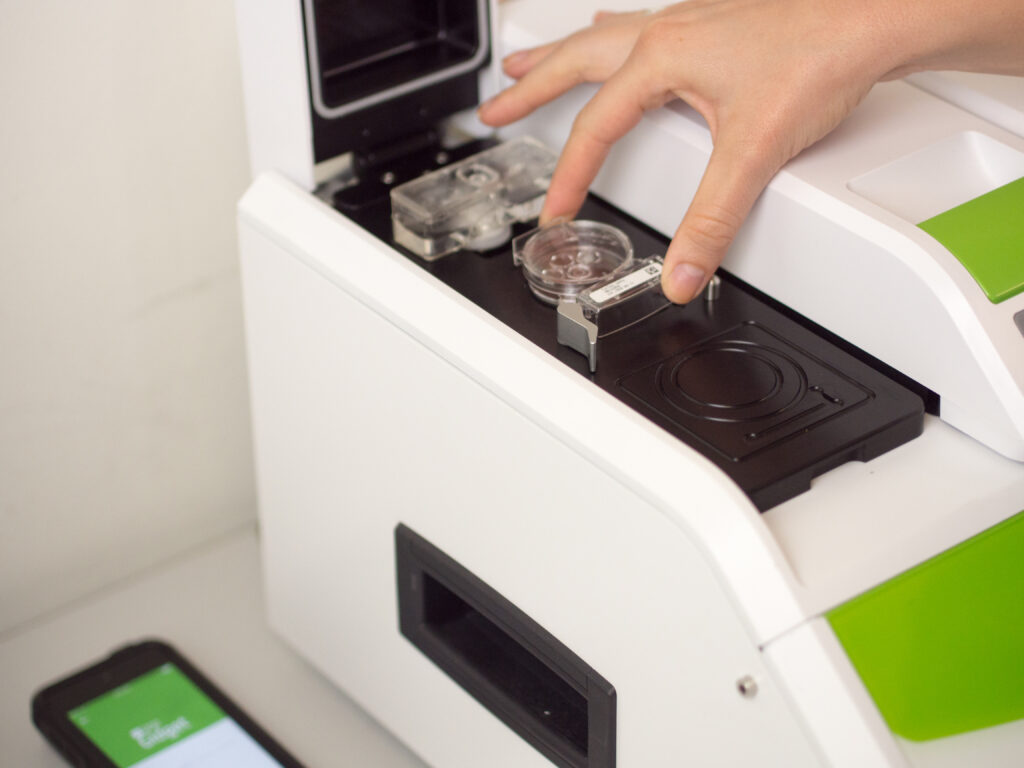
| Spatial isolation, one patient per environment | Independent single-patient chambers | Six independently controlled chambers, each designed to hold one patient’s embryos |
| Identical culture conditions for every case | Humidified culture in every chamber | A humidified environment in all chambers, designed to minimise osmolality increases |
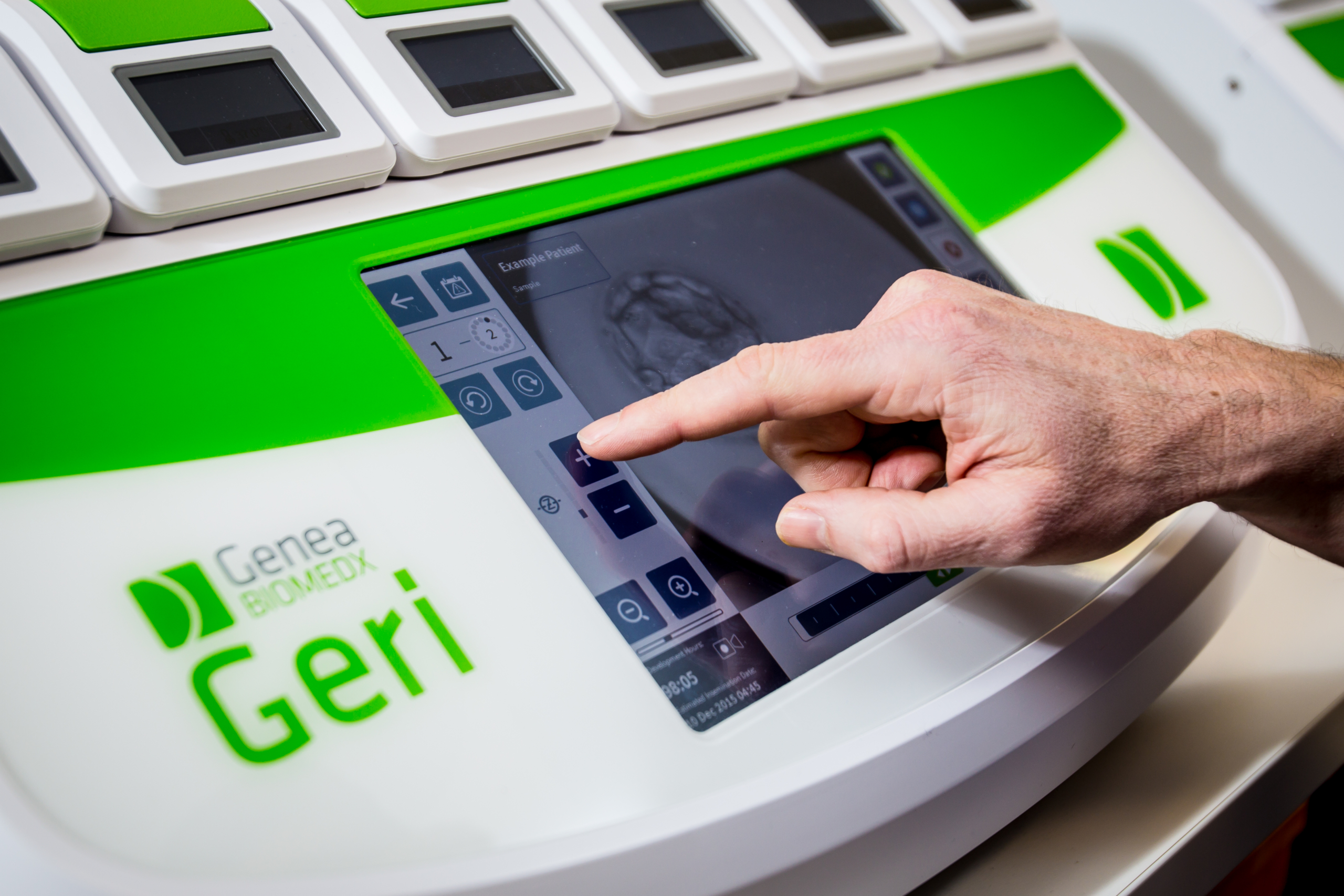
| Identical monitoring for every case | A dedicated camera per chamber | A high-resolution camera in each chamber with continuous imaging |
| Independent control of critical parameters | Its own gas line, sensors and alarms per chamber | Independent gas lines plus individual temperature, CO₂ and humidity sensors with dedicated alarms |
| A realistic dedicated space | Compact footprint and modular expansion | A benchtop design, with Geri Max running two independent units in one configuration |
| One quality system across workflows | The same software and procedures everywhere | Modular software with remote access across all units |
One honest caveat belongs here. No incubator is a biosafety device, and none of this replaces your protocols. What a well-designed platform does is give your standard operating procedures the physical environments they ask for, while local regulation and your quality system keep defining how infectious cases are handled in your lab.
A short audit before your next infectious case
| Ask your team | Why it matters |
| Can we isolate the patient in time, for example at the end of the daily workflow? | Time isolation reduces exposure for other cases and for staff, and it costs nothing but scheduling discipline. |
| Can we isolate the patient in space, with dedicated chambers or a dedicated unit? | Space isolation is the strongest separation a laboratory can give a cycle. |
| Does every patient keep continuous time-lapse monitoring? | Morphokinetic data should not depend on what is written in a patient’s chart. |
| Does every patient keep the same humidified culture environment? | Evaporation and osmolality drift affect every embryo in the same way. |
| Can we maintain uninterrupted embryo culture and still monitor embryo development? | Single-step media and time-lapse incubation support uninterrupted culture while enabling continuous embryo monitoring. |
| Are temperature, gas and humidity controlled and alarmed per patient? | Independent control is what makes a chamber genuinely independent. |
| Do standard and infectious workflows run on one quality system? | Two platforms mean two training paths and double the quality-control burden. |
If several answers come back as no, the limiting factor is probably not your team or your procedures. It is the hardware.
Why Geri for infectious workflows
Geri was developed around a clear principle: spatial separation should never come at the expense of clinical standards. Where conventional approaches force a laboratory to relocate infectious cases to a separate system, Geri integrates separation directly into its design, so isolating a patient in space becomes a native capability rather than an added workaround. This alignment with published recommendations means your laboratory can meet the guidelines’ requirements for time and space separation without downgrading the care those patients receive.
The result is a laboratory that must no longer treat infectious cycles as an exception. Your patients receive the same consistent standard of care regardless of what is recorded in their chart, and your laboratory removes a compromise that was never required in the first place. Geri does not replace your standard operating procedures, but it removes the hardware limitation that has traditionally forced that compromise.
The same standard, for every patient
There is a simple sentence that should hold true in any laboratory: the standard of care does not depend on the patient’s chart. Getting there is mostly a matter of choosing equipment that adapts to your protocols, instead of forcing your protocols to adapt to the equipment.
References
Related Articles
-
From Ovaries to the Lab — Understanding Egg Maturity in IVF
The Journey Begins with Your Eggs In IVF (in vitro fertilisation), success begins at the very first step: your eggs. While much attention is placed on fertilisation and embryo development,…